PDAP
The Partnership for Development Assistance in the Philippines Inc (formerly known as Philippine Development Assistance Programme, Inc.), started as a consortium of Filipino and Canadian non-government organizations (NGOs). It was founded in 1986 as a non-stock, non-profit organization, to become an effective instrument in reducing poverty and inequity in the Philippines. PDAP prides itself in having 6 member networks with more than 300 community-based members and partner NGOs. PDAP has distinguished itself in promoting and developing rural enterprises for poverty reduction and as a tool in promoting peace in conflict-affected areas.
PDAP Background
PDAP as Program Entity
The Philippine Development Assistance Programme (PDAP) began as a consortium of Filipino and Canadian non-government organizations (NGOs) that works to reduce poverty and inequity in the Philippines. For the last 17 years, PDAP has supported more than 300 community-based projects for the benefit of almost 2 million Filipinos. It has successfully implemented three major development projects over three phases of development programming support from CIDA amounting to more than Cdn$27 million. Within this period PDAP implemented these programs through an arrangement between two entities, PDAP Canada, Inc. and PDAP Philippines, Inc.
The first phase implemented from 1986 until 1990 had a support of Cdn$ 4.88M from CIDA. PDAP took on a responsive development programming approach during this period supporting various community-based projects ranging from social credit, agricultural productivity and income generating projects. Projects submitted by community-based peoples organizations (POs) are processed and endorsed by the Philippine NGO member-networks for approval by PDAP Canada. The local member-networks also provide technical assistance and monitoring of projects implemented.
From 1990 until 1996, PDAP continued with the Phase II of its development programming obtaining a CIDA support of Cdn$15M. It was essentially a continuation of Phase I in terms of design, structure and objectives. Towards the latter half of Phase II however, PDAP pursued a more thematic approach on Sustainable Agriculture (SA) and the Central Loan Fund (CLF).
|
|
PHASE 1: 1986 – 1989 |
PHASE 11: 1989 - 1995 |
|
Cost |
$4.88 million |
$15 million |
|
Modality |
Small project funding i.e. local NGOs/POs to submit proposal to PDAP Philippines member network, who would endorse the proposal and forward it to PDAP Canada secretariat via PDAP Philippines secretariat, Canadian NGO members of PDAP Canada would then select which projects they wanted to support and commit to funds to be used in matching with CIDA resources. |
Essentially the same as for Phase 1 – with a gradual shift toward a so-called program focus on supporting agricultural development projects in the last year. New PDAP Secretariat became the only remaining option as an endorser for new projects without a partner affiliation. |
|
Matching Ratio |
10:1 (CIDA: NGO funds) |
5:1 |
|
Aim |
To support community - based poverty alleviation projects. |
To support community – based poverty alleviation projects (focus on urban and rural poor, and disadvantaged groups such as children, women). |
|
Cost |
$4.88 million |
$15 million |
|
Management Approach |
Independent secretariats (housed with one partner in each country), responsible for administration, financial management, project development/assessment and screening, communications, brokering of project proposal and funds, monitoring, quality control. |
Essentially the same as for Phase 1. PDAP Philippines became legally incorporated in 1989 and set up a secretariat structure hosted by one of its members. |
|
Administrative Costs |
Each project endorser in the Philippines received 3% of project cost to cover monitoring and reporting. Canadian NGOs were also able to claim limited admin fees. |
Same as Phase 1 |
|
Canadian Partners
|
YMCA-Vancouver, Canadian University Services Overseas (CUSO), British Columbia Save the Children (BC SCF), Canadian Hunger Foundation (CHF), Cardinal Leger, Hope International, World Accord, Oxfam-Quebec, World Relief Canada. |
YMCA-Vancouver, CUSO, BC SCF, CHF, Cardinal Leger, Hope International, World Accord, Oxfam-Quebec, World Relief Canada, Club 2/3, CFTC, National Council of Canadian-Filipino Associations.
|
|
Filipino Partners |
PBSP, PhilDHRRA, Assisi, AF, ANGOC |
PBSP, PhilDHRRA, Assisi, AF, ANGOC, NCSD |
|
Governance |
Independent Program Committee in each country, with joint Committee representing both countries. |
Same as in Phase 1. |
From 1997-2004 PDAP implemented its third phase of programming through the Promoting Participation in Sustainable Enterprises (PPSE) Program with financial contributions from CIDA amounting to Cnd$7.9 million. PPSE departed from the traditional modality of providing assistance to PDAP member-endorsed partners on a request basis. To achieve the Program goals, PDAP adopted a purposive approach to the theme of enterprise development which required the systematic selection of partner communities and institutions on the bases of physical/natural resource, human, and financial resources and capacities. PDAP put import on partners whose resources would be able to support the expansion and scaling up of successful rural enterprise initiatives. Initially a site-based approach, this later graduated to an approach that is more attuned to market and industry requirements.
The adoption of this thematic approach of development programming in PPSE (or Phase III) was shaped by a combination of various factors: a) the program focus and achievements of the latter part of the Phase II programming period; b) the context and realities in the Philippine development setting particularly the poverty situation in the rural areas; c) the achievements, constraints and challenges among the NGO network-members; and, d) the development priorities of CIDA
Building on the considerable experience of PDAP in two phases of programming such as strengthening of NGOs/POs for savings mobilization and income improvement, capital building and support to rural micro/small enterprises, establishment of profitable marketing coops, PPSE was therefore lodged under the private sector development (PSD) strategic objective of CIDA.
Other PDAP Programs and Projects
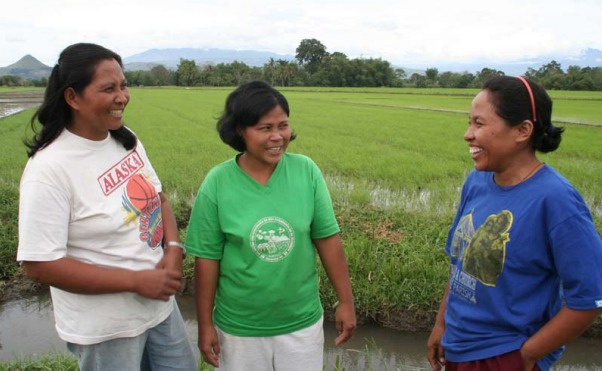
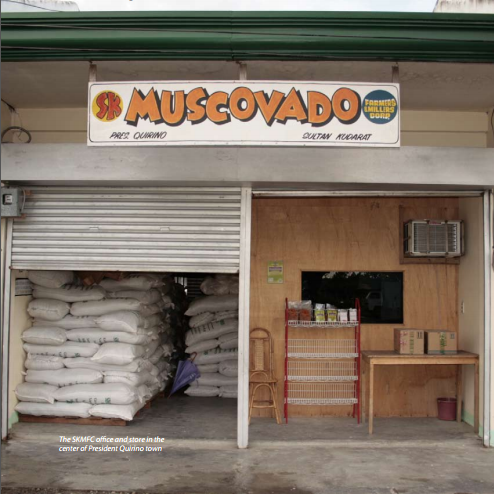
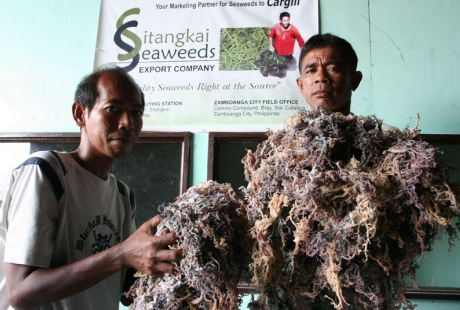
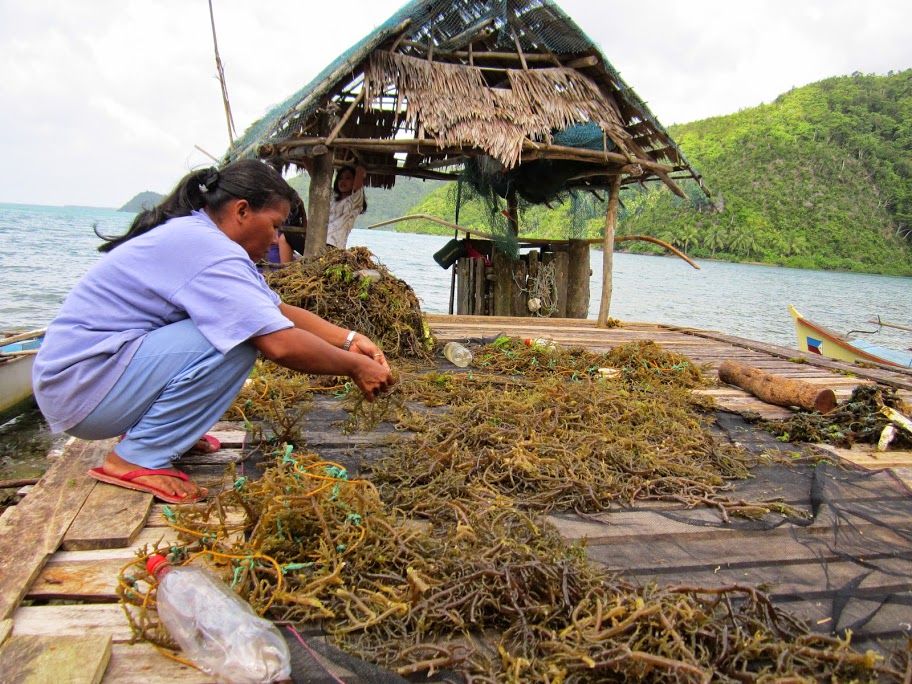
Apart from PPSE, PDAP has also been working in Southern Philippines for the last seven years. In partnership with community-based groups of Muslim, IPs (indigenous peoples) and Christians since 1997 beginning with the PPDSA (Program for Peace and Development in the Southern Zone of Peace and Development/SZOPAD Areas) and with the recently concluded PROPEACE (Mindanao Program for Peace and Development), PDAP has supported about 180 various livelihood and enterprise projects. These projects range from agricultural/fish/livestock production and agricultural post-harvest facilities for livelihood and food security to enterprise projects on food and handicraft processing, basic commodities merchandising, micro-financing, grains trading (rice and corn) for increasing household/family income.
The ProPeace Program supported livelihood creation, enterprise development, community organizing and capability building activities of 90 community-based people’s organizations (POs) of Muslims, indigenous peoples (IPs) and poor Christian settlers throughout the 14 provinces and 10 cities of the Special Zone of Peace and Development (SZOPAD) in Mindanao. The program was supported by financial contributions from the CIDA-supported Philippines-Canada Development Fund (PCDF).
In response to the Pikit War (Pikit, Cotabato in Central Mindanao) of February 2003, PDAP implemented a Relief and Rehabilitation Project in Damulog, Bukidnon. This was a P 2.6 million relief and rehabilitation project which provided emergency relief to the evacuees from the border barangays/towns of Cotabato and Bukidnon who fled their communities at the height of the military offensive in Columbio, Cotabato on December 2002. The evacuees, mostly Indigenous Peoples, numbering 600 families were scattered in five evacuation centers in Damulog. This project was supported by the Philippine Government and CIDA through the Philipines-Canada Development Fund (PCDF). This was a short-term project implemented for the period June 2003-August 2003.
In mid-2003, the Japan Bank for International Cooperation (JBIC), which funded the MMIP (Malitubog-Maridagao Irrigation Project in Central Mindanao), has commissioned PDAP to conduct an impact assessment study of the project which covers the towns of Pikit and Carmen in North Cotabato province and the towns of Pagalungan and Pagagawan in Maguindanao province. This six (6) month study, implemented on September 2003 until February 2004, was intended to – (a) determine the effects of the irrigation project on local economy and peace in the region; and, (b) to draw useful lessons and recommend plan of action for improvement of stage 1 covering 6,562 hectares service area and implementation of stage 2 of MMIP covering 4,278 hectares service area.
PDAP as an Institution
PDAP-Philippines, Inc., which is composed of six national level NGO networks with more than 300 community-based member or affiliates in the Philippines, is registered with the Securities and Exchange Commission (SEC) of the Philippines. Its Board of Directors, composed of the representatives of the six NGO members provides the management policy direction of the organization. It has a full-time staff which handle day to day administration, project coordination and project implementation functions.